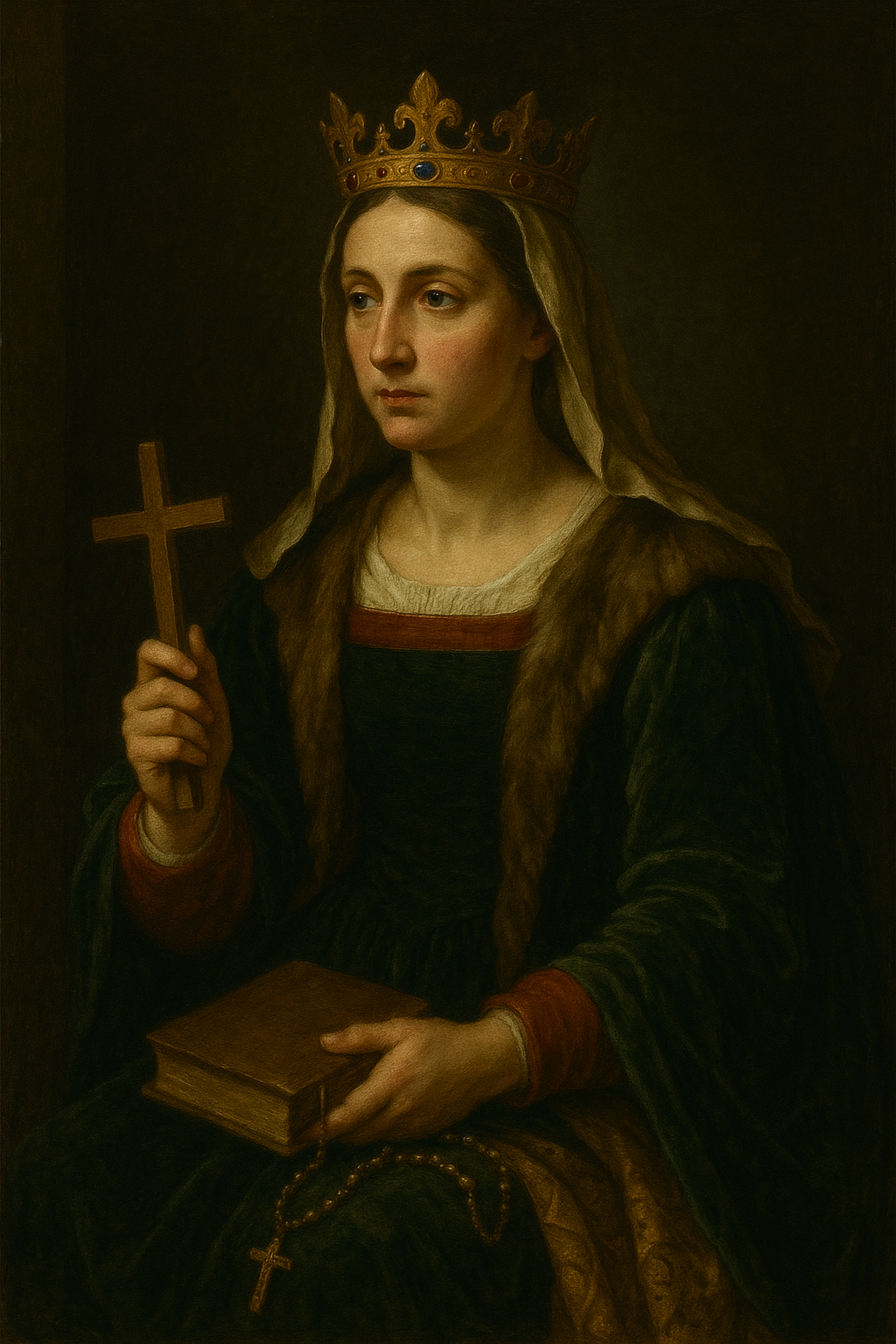


Saint Margaret of Scotland, lovingly called The Pearl of Scotland, united royal dignity with profound holiness. As queen, wife, and mother, she transformed her kingdom through faith, justice, and mercy. Her life was a shining example of how power, when guided by virtue, can become an instrument of charity and sanctity.
Early Life in Exile
Margaret was born around 1045 in Hungary, where her father, Edward the Exile, lived after fleeing England’s Danish conquest. Her mother, Agatha, raised her children with deep piety and education. From her earliest years, Margaret displayed a gentle spirit and a sharp intellect rooted in prayer.
After the death of King Edward the Confessor, her family returned to England. However, the Norman invasion forced them once again to flee. They sought refuge in Scotland, where divine providence brought them to the court of King Malcolm III. The king, drawn by her holiness and grace, asked for her hand in marriage. Their meeting—born of hardship and faith—became a turning point in Scottish history.
Learn more about her early life at Catholic Online – Saint Margaret of Scotland.
A Queen Guided by Faith
Margaret accepted marriage to King Malcolm III as part of God’s plan for her life. With love and patience, she inspired her husband to greater virtue. Her gentle influence softened his character and deepened his devotion. Together, they built a household centered on prayer, compassion, and care for the poor.
As queen, Margaret became a model of Christian leadership. She encouraged the reform of local customs, brought the Scottish Church into closer union with Rome, and promoted reverence for the Eucharist. Her actions guided not only her husband but also the entire kingdom toward a stronger faith.
Her palace often resembled a convent rather than a court—filled with prayer, charity, and good works.
Charity to the Poor and Zeal for the Church
Each morning before taking food herself, Margaret served the hungry gathered at the palace gates. She often washed their feet and gave them food with her own hands. Her humility touched both noble and commoner alike.
Beyond charity, she built hospitals, established schools, and restored churches across the land. She beautified sacred spaces, providing vessels and vestments worthy of divine worship. Her efforts encouraged a greater love for the Mass and devotion to the Liturgy of the Hours.
Through her generosity, Scotland’s faith was renewed and strengthened, revealing the heart of a queen who saw Christ in every person.
To learn more about her reforms, visit Vatican News – St. Margaret of Scotland.
Faithful Wife and Loving Mother
Saint Margaret’s holiness shone most clearly within her home. She and King Malcolm were blessed with eight children, six sons and two daughters. She taught them to pray daily, to love the poor, and to honor God above all things.
Her husband deeply admired her faith. Even amid royal duties, they prayed together and encouraged each other in virtue. Margaret’s influence helped form future kings who governed with compassion and justice.
Her spiritual life remained intense despite her busy duties. She practiced fasting, frequent confession, and long hours of prayer. Those around her often found her kneeling before the crucifix, interceding for her family and her people.
Suffering, Death, and Canonization
In 1093, tragedy struck. King Malcolm and their eldest son died in battle. Weakened by illness, Margaret received the news with serene faith. She prayed, “I thank You, Lord, for letting me suffer such sorrow in my last hour.” A few days later, she peacefully passed away on November 16, 1093, surrounded by her children.
Her holiness quickly became known throughout the land. Many reported miracles through her intercession. In 1250, Pope Innocent IV canonized her, declaring her Saint Margaret of Scotland. Her remains were enshrined at Dunfermline Abbey, and she was later named Patroness of Scotland, large families, and widows.
Legacy of the Pearl of Scotland
Saint Margaret’s influence endured for centuries. She showed that sanctity is not confined to the cloister but can flourish in the responsibilities of daily life. Her example continues to inspire leaders, mothers, and all who serve others with humility and faith.
Her feast day on November 16 calls the faithful to live with compassion, courage, and steadfast devotion to God.
For a deeper historical perspective, read The Catholic Encyclopedia – St. Margaret, Queen of Scotland.
Conclusion
Saint Margaret of Scotland, Queen and Confessor, lived the Gospel with regal grace and maternal love. Her faith shaped a nation, her charity uplifted the poor, and her holiness sanctified her family.
May her example remind us that true greatness lies not in wealth or power, but in service, humility, and love for Christ. Through her intercession, may we learn to rule our hearts with mercy and bring God’s light into the world around us.
Related Links: