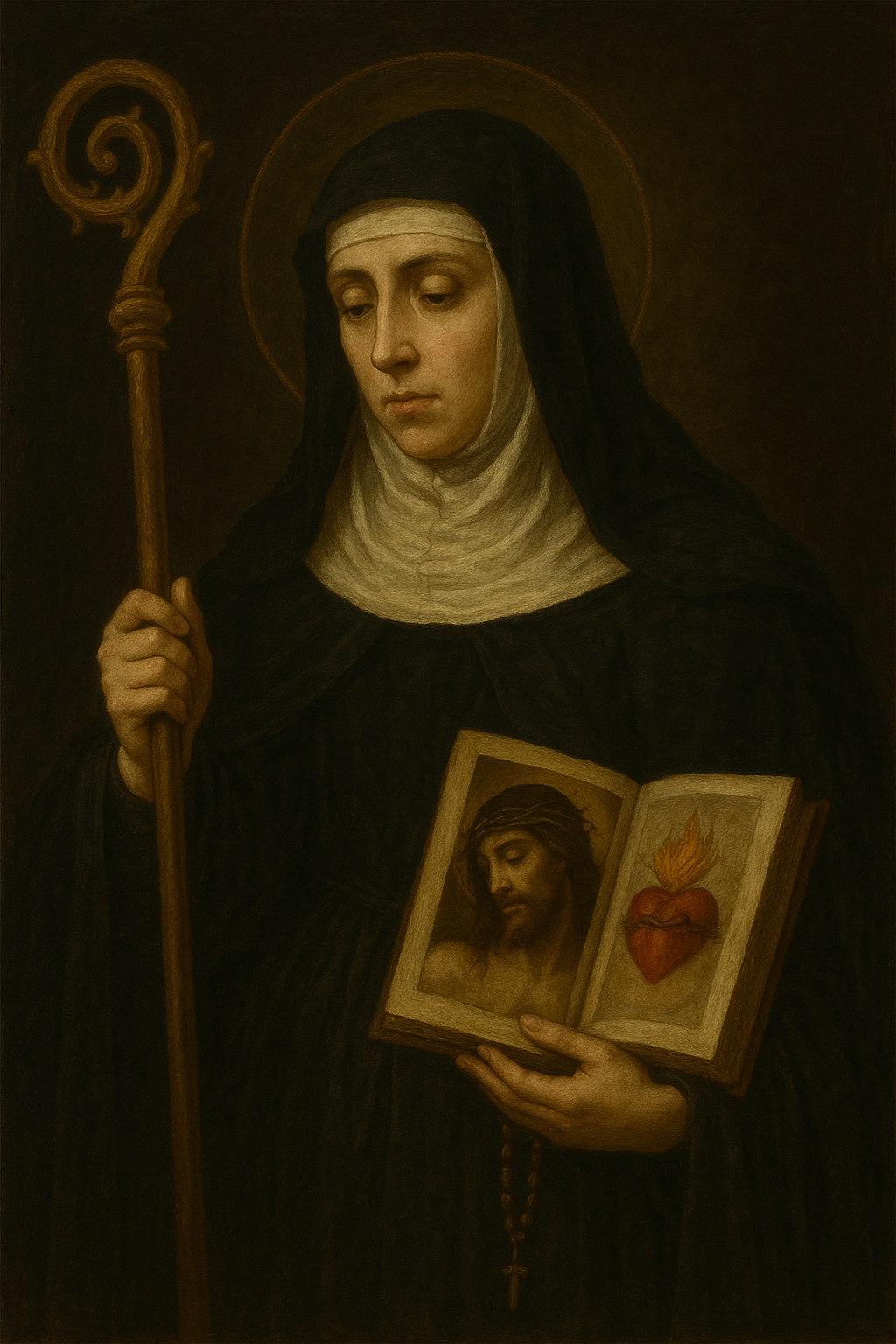



Saint Gertrude the Great, a Benedictine nun and mystic of the 13th century, stands among the most luminous figures of medieval spirituality. Her deep union with Christ and her devotion to the Sacred Heart inspired countless souls to love God more intimately. Known for her mystical writings, profound intellect, and tender charity, she is rightly called the Great—a title shared by few women in Church history.
Early Life and Monastic Vocation
Gertrude was born on January 6, 1256, in Eisleben, Germany. At the age of five, she entered the Benedictine monastery at Helfta, where she received a classical education and quickly excelled in philosophy, literature, and theology. Her early years were marked by intellectual brilliance and an intense desire for truth.
However, when she was twenty-five, God called her from study to intimacy. In 1281, she experienced a powerful vision of Christ that transformed her heart entirely. From that moment, she devoted her life not to worldly knowledge but to divine love. Her conversion marked the beginning of her extraordinary mystical journey.
To learn more about the Benedictine Order, visit the Order of Saint Benedict.
Visions and Devotion to the Sacred Heart
Saint Gertrude’s mystical experiences were centered on the Sacred Heart of Jesus. In her visions, Christ revealed to her the depth of His love for humanity and the desire of His Heart to be known and loved in return. Long before the devotion became widespread through Saint Margaret Mary Alacoque, Gertrude was already proclaiming the tenderness and mercy of the Heart of Christ.
Her writings, especially The Herald of Divine Love (Legatus Divinae Pietatis), record these visions in language both poetic and profound. They reveal the intimate dialogue between the soul and God, filled with warmth, reverence, and trust. Through her, the Church gained a deeper understanding of divine friendship—a love both personal and universal.
Life of Prayer and Charity
Gertrude lived a life entirely centered on the Eucharist and prayer. Her days were filled with contemplation, intercession, and acts of humble service. She possessed a special devotion to the souls in purgatory, often offering her sufferings and prayers for their release.
Her spiritual insights also brought comfort to her community. Those around her saw in Gertrude the serenity of a soul resting in God’s love. Though she suffered from illness and physical weakness in her later years, she bore everything with joy, viewing suffering as a way to unite herself more closely with Christ.
For more on her spirituality, visit the Vatican News – Saint Gertrude the Great.
Writings and Theological Contributions
Saint Gertrude’s writings reveal a profound theological depth that harmonizes reason and mystical experience. Her Spiritual Exercises serve as a guide for those seeking holiness in daily life. They emphasize humility, gratitude, and the transforming power of divine love.
Her revelations also deepened the Church’s understanding of the mystical body of Christ—the union between Christ and all believers. In this way, her insights anticipated later teachings of saints such as Catherine of Siena and Thérèse of Lisieux.
Pope Benedict XIV later declared her the title “the Great,” recognizing the universal value of her spiritual writings and influence.
Death and Canonization
Saint Gertrude the Great passed into eternal life on November 17, 1302. Her death was peaceful, filled with the joy of meeting the One she had loved so ardently on earth. Though never formally canonized, she was approved for veneration throughout the Church, and her feast day is celebrated on November 16.
She remains one of the few women given the title “the Great,” a recognition of her sanctity, intellect, and lasting influence on Catholic mysticism.
Conclusion
Saint Gertrude the Great, Virgin, was a soul wholly possessed by divine love. Her visions, writings, and prayers continue to draw the faithful into the mystery of Christ’s Heart. She shows that even in a world filled with distractions, the soul can find peace and joy by resting entirely in God.
May her intercession enkindle in us the same burning love for the Sacred Heart and lead us closer to the eternal embrace of divine mercy.
Related Links: