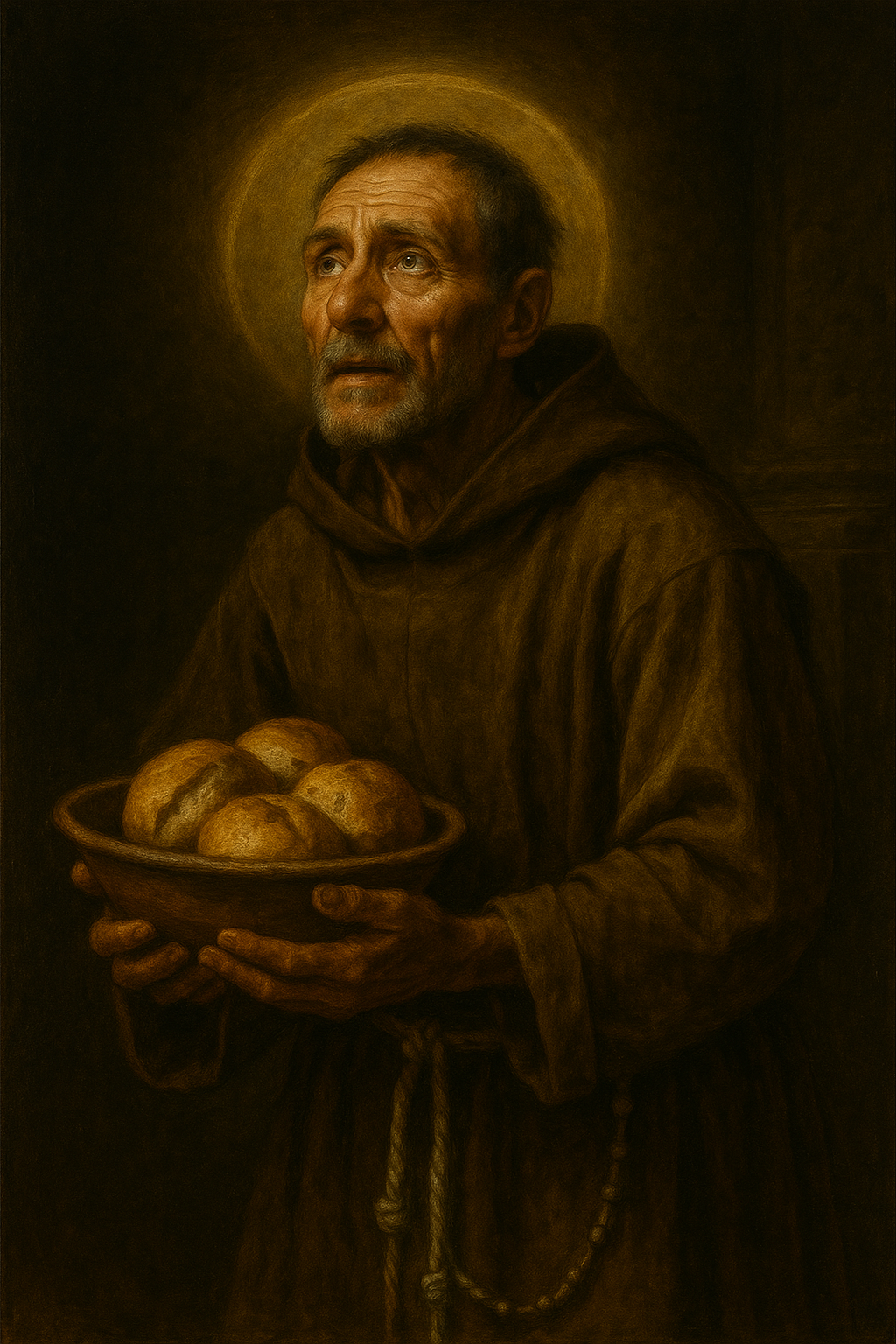

Saint Didacus, known in Spanish as San Diego, stands as one of the Church’s shining examples of humility and sanctity. Though he held no high office or academic title, his simple faith and hidden service made him a powerful witness to God’s love. Canonized for his miracles and charity, Saint Didacus reminds the faithful that holiness does not depend on rank or learning, but on the purity of one’s heart and the willingness to serve.
Early Life and Religious Vocation
Didacus was born around 1400 in the small village of San Nicolás del Puerto, near Seville, Spain. From a young age, he displayed a contemplative spirit and a desire for solitude. Drawn to prayer and penance, he lived as a hermit for several years before joining the Order of Friars Minor, the Franciscans, as a lay brother.
He was not educated in theology, yet his simplicity and spiritual wisdom surpassed that of many learned men. His humble demeanor and devotion to God earned him the respect of his fellow friars.
To learn more about the Franciscan Order, visit Order of Friars Minor – Official Site
Life of Service and Miracles
Saint Didacus spent much of his life in menial service, working as a porter, cook, and infirmarian. He approached every task with joy, offering it as a prayer to God. During his time at the Franciscan friary in Arizafa and later in the Canary Islands, his holiness became widely known.
When an epidemic broke out in Rome during the canonization of Saint Bernardine of Siena in 1450, Didacus served the sick tirelessly. Witnesses testified that the sick were often cured through his prayers and touch. His charity, humility, and miraculous healings won him the admiration of both the poor and the powerful.
His Final Years and Death
After years of humble labor and faithful service, Saint Didacus returned to Spain. He spent his final years in the convent of Alcalá de Henares, where he died on November 12, 1463. His body was found incorrupt, exuding a sweet fragrance—an early sign of his sanctity.
Pope Sixtus V canonized him in 1588, recognizing his miracles and the holiness of his life. The city of San Diego, California, was later named in his honor, spreading his legacy even to the New World.
For more on his canonization, visit Catholic Online – St. Didacus.
Spiritual Legacy and Patronage
Saint Didacus is venerated as the patron of San Diego, Franciscan lay brothers, and those who serve the poor. His life exemplifies the Franciscan virtues of poverty, humility, and charity. He teaches that even the simplest acts, when done with love for God, can sanctify the soul and bring grace to others.
His feast day, celebrated on November 13, invites the faithful to reflect on the hidden value of humble service and the joy found in doing God’s will.
You can read more about his feast day in the Roman Martyrology.
Conclusion
Saint Didacus, Confessor, lived a life that glorified God not through greatness in the world, but through simplicity, service, and devotion. His humility transformed ordinary work into acts of holiness. In an age that prizes recognition and power, his example reminds Catholics that the truest greatness lies in becoming small before God.
Through his intercession, may we learn to serve others joyfully, love God wholeheartedly, and seek sanctity in the ordinary moments of life.
Related Links: