


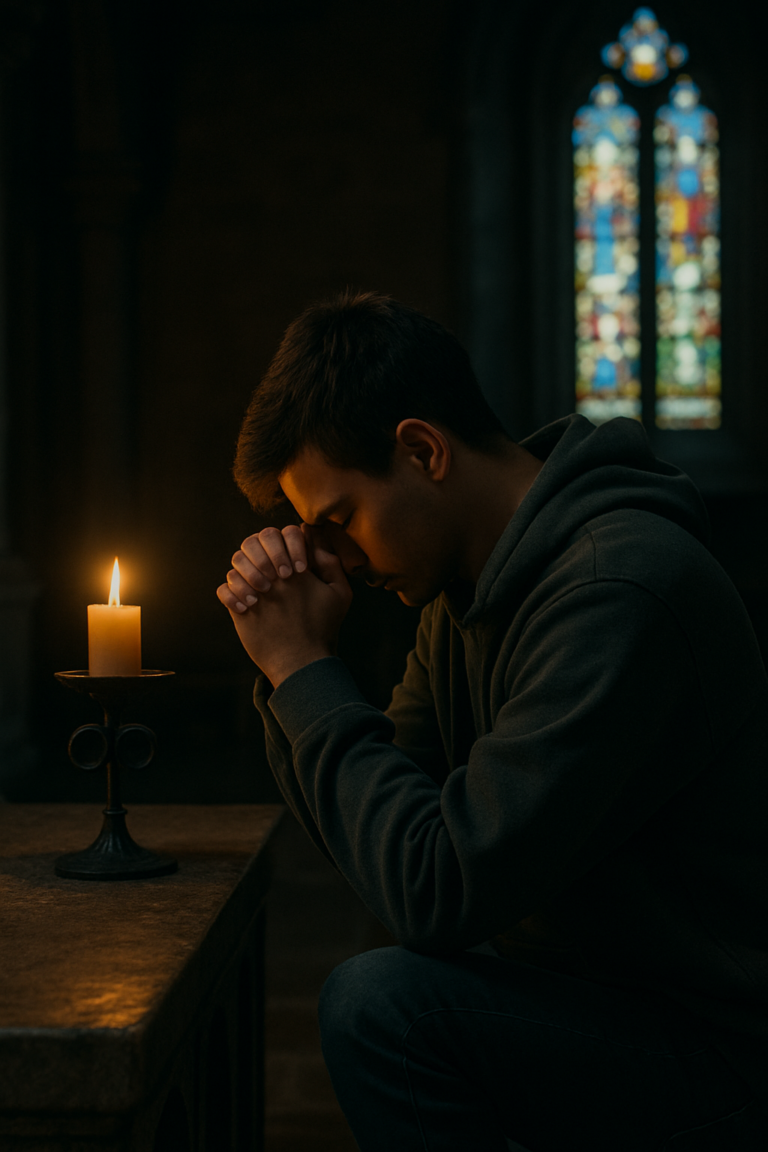
Catholic men are called to pray as they are—not as they should be. Prayer isn’t for the polished. The Fathers remind us to come to God in our real condition—tired, distracted, even sinful. He doesn’t wait for perfection. He meets you where you are.
Suggestions for the Exam of Conscience
The daily examen is one of the most powerful tools the Jesuits and the desert Fathers gave us: a nightly review of where you fell short and where you felt grace. It’s not about condemnation—it’s about awareness.
One Practical Step: Use Your Alarm
Set a daily alarm labeled “Examen.” When it fires, stop. Look back over your day with four simple questions: (1) When did I feel closest to God? (2) When did I drift? (3) What do I need to confess? (4) What grace do I need tomorrow?
Slow Down to Catch Up
St. Ignatius wrote that we should ask God for “knowledge of the world’s lying promises and the courage to reject them.” The world promises security in accumulation. God promises freedom in surrender.
Trust Him with Your Imperfection
Fr. John Bartunek writes that “honesty about your sins is itself a form of reverence for God’s mercy.” Come as you are. Stay as long as you need. He’s not going anywhere.
The Point
You don’t need to be perfect to pray. You just need to be honest. Catholic men bring their real selves—not the curated version—to the throne of grace.
If you’re looking to build a daily examen habit alongside other Catholic men, join a brotherhood committed to prayer and mutual accountability in faith.
